
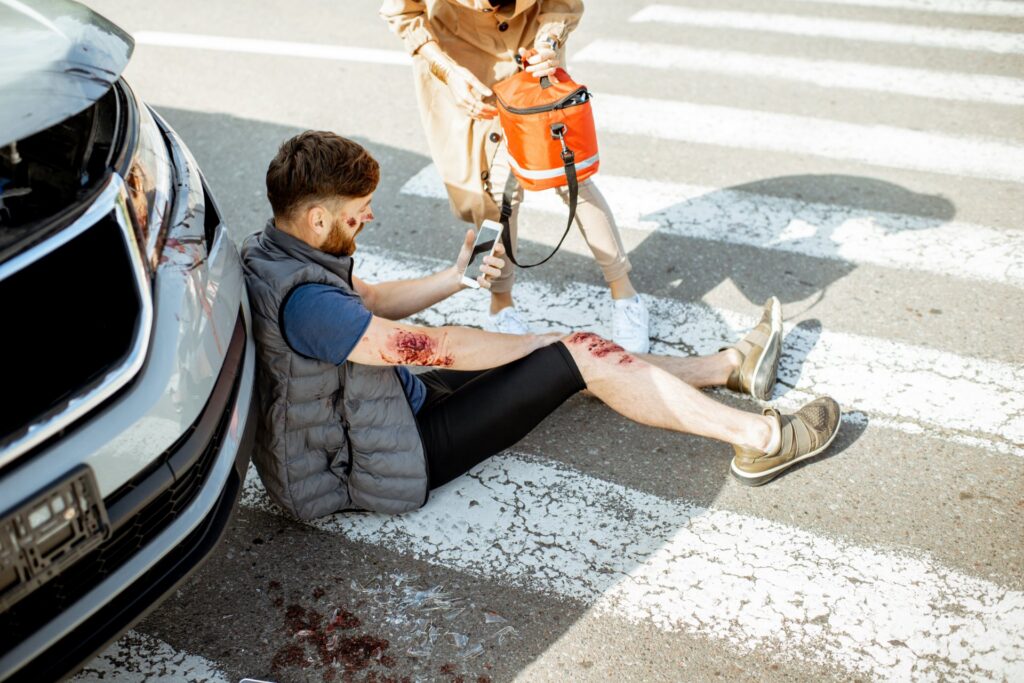
As a driver in New York, one of the many things you need to be aware of is pedestrians. And if a pedestrian enters traffic, causing an accident in Westchester County, you may wonder who is at fault. In these types of scenarios, determining driver vs pedestrian liability in NY can come with many challenges, which is why you should always consult with an experienced personal injury attorney.
Can Pedestrians be at Fault?
A common misconception when it comes to traffic laws is that pedestrians are never at fault. And although it is true that pedestrians are more vulnerable and drivers have a greater duty of care, this doesn’t mean that the fault always falls on the driver.
In New York, the law recognizes that both pedestrians and drivers have the responsibility to navigate roadways in a safe manner. So, if a pedestrian acts recklessly and enters traffic, causing an accident, it is very likely that they will hold partial or all of the fault.
Here are some examples of when New York law may determine that the pedestrian is at fault:
- Jaywalking
- Walking while distracted
- Entering traffic unexpected
- Ignoring traffic signals
New York Comparative Negligence Rules
New York’s comparative negligence law is ultimately what determines who is at fault in an auto or pedestrian accident. Comparative negligence means that liability doesn’t have to fall on a single individual, but can rather be shared among different parties.
Because different parties can hold a measure of fault, this means that each party can pursue compensation for the accident. The only drawback to this is that your compensation amount will be reduced according to your percentage of fault.
For example, say a pedestrian enters traffic unexpectedly in Westchester County, and they are struck by a speeding car. Both parties are at fault to a certain extent because they were not obeying the roadway laws and acting safely.
How Fault is Determined in Westchester County Pedestrian Accidents
Due to New York’s comparative negligence law, it’s crucial that you are able to prove who holds what percentage of fault. If you want to receive compensation for the accident, you will need to prove that the other party held a larger percentage of fault so that you can still receive a fair compensation amount.
Here are some of the ways that fault is determined:
- Eyewitness statements
- Dashcam footage
- Traffic cameras
- Police reports
- Expert testimony
- Medical documentation
To protect your right to receive compensation, you need to hire a personal injury lawyer in New York to represent you and help you gather the necessary evidence.
Get In Touch With a Westchester County Personal Injury Lawyer
If a pedestrian entered traffic, causing an accident in Westchester County, this can create a complex legal situation. That being said, drivers have a certain level of protection since it isn’t always entirely their fault when a pedestrian causes an accident.
Because fault can go in either direction in crosswalk accident legal claims in Westchester County, understanding New York’s approach to liability is essential.
So, if you want to file a claim to receive pedestrian accident compensation, contact us today at Gash & Associates, P.C., in Westchester County, New York, at 914-328-8800.
